Having a tooth extracted is a significant procedure, but it is often the first step toward a healthier, more comfortable smile. At Keep Smiling El Paso, we understand that the idea of recovery can be daunting. Whether you have had a wisdom tooth removed or a damaged tooth pulled, what you do in the hours and days following your appointment is critical for healing.
Proper aftercare minimizes pain, reduces the risk of infection, and helps you get back to your daily routine faster. This guide covers everything you need to know to ensure your recovery is as smooth and stress-free as possible.
The First 24 Hours: Prioritizing the Clot
The most critical part of your recovery happens immediately after you leave our office. Your body’s natural healing response is to form a blood clot at the extraction site. This clot acts like a protective bandage over the exposed bone and nerves. Protecting this clot is your number one job for the first day.
Controlling Bleeding
You will leave your appointment biting on a gauze pad. It is important to maintain firm, constant pressure on this gauze for at least 30 to 45 minutes. The pressure helps the blood clot form. If bleeding continues after you remove the first piece of gauze, place a fresh, damp piece over the site and bite down firmly for another 30 minutes.
Remember, a little bit of oozing is normal for the first day or two. If you lie down to rest, you might want to put an old towel over your pillowcase to prevent any staining.
Protecting the Clot
To avoid a painful condition known as “dry socket”—where the clot dislodges and exposes the bone—you need to follow a few strict rules for the first 24 hours:
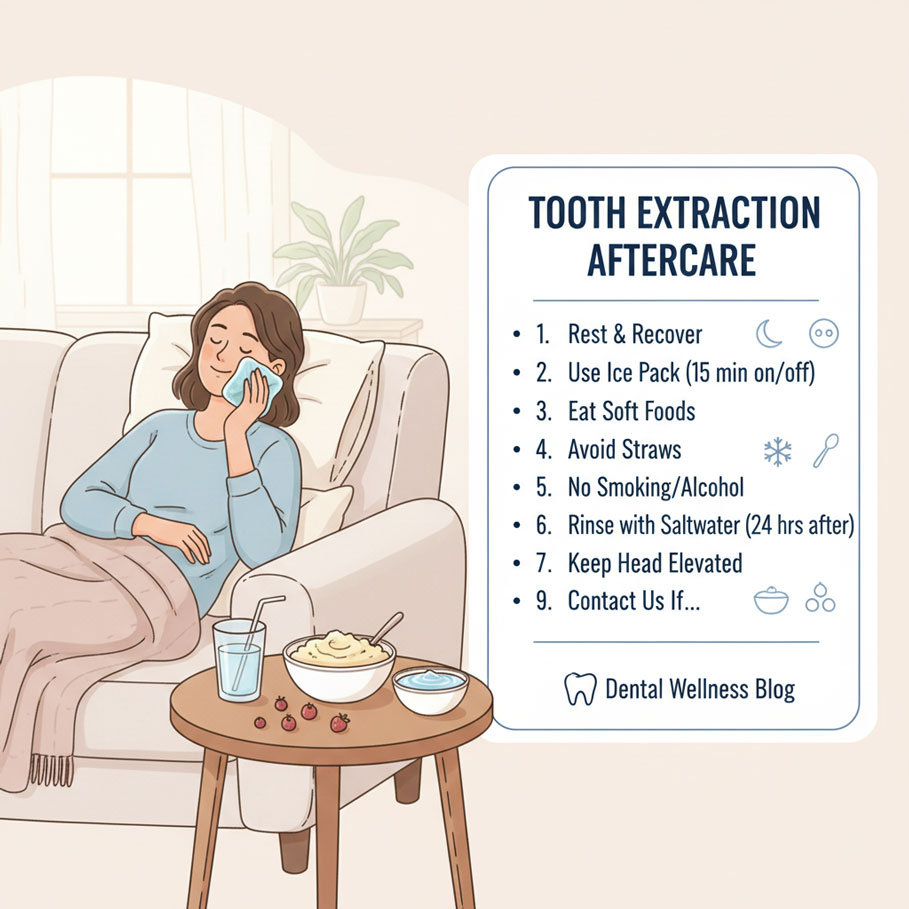
- No Straws: The suction created by using a straw can pull the clot right out of the socket. Drink directly from the cup.
- No Spitting: If you need to clear your mouth, lean over the sink and let fluids drool out naturally. Do not spit forcefully.
- No Smoking: Smoking introduces chemicals that delay healing and the sucking motion endangers the clot. Avoid smoking for at least 48 hours, though longer is better.
- Limit Physical Activity: Go straight home and rest. Keep your head elevated with pillows to reduce bleeding and swelling. Avoid the gym or heavy lifting for at least three days.
Managing Swelling and Discomfort
It is completely normal to experience some swelling and discomfort after oral surgery. This is your body’s reaction to the procedure, and it usually peaks around the second or third day before subsiding.
Ice Packs
To minimize swelling, use ice packs on the outside of your face near the extraction site immediately after surgery. Apply the ice for 20 minutes, then remove it for 20 minutes. Repeat this cycle as much as possible during the first day. After 24 hours, ice is less effective, and moist heat (like a warm washcloth) may be more soothing.
Pain Management
Take any prescribed medications exactly as directed by your dentist. If you were prescribed antibiotics, finish the entire course even if you feel fine. For mild to moderate discomfort, over-the-counter pain relievers like ibuprofen or acetaminophen are often effective. Never take medication on an empty stomach unless directed otherwise, as this can cause nausea.
Eating for Healing: A Soft Food Diet
Your body needs fuel to heal, but your mouth needs a break. For the first few days, stick to a soft-food diet that requires little to no chewing.
Excellent food choices include:
- Applesauce
- Yogurt and pudding
- Mashed potatoes
- Scrambled eggs
- Broth-based soups (warm, not hot)
- Smoothies (remember: no straws!)
Foods to avoid:
- Crunchy or crumbly foods: Chips, nuts, and popcorn can break into sharp pieces that get lodged in the healing socket.
- Spicy or acidic foods: Tomato sauce, orange juice, or hot peppers can irritate the sensitive tissue.
- Hot liquids: Extremely hot coffee or soup can dissolve the blood clot. Stick to lukewarm or cold beverages.
Hydration is also key. Drink plenty of water to keep your body hydrated, which aids the healing process.
Oral Hygiene During Recovery
Keeping your mouth clean prevents infection, but you must be gentle around the surgical site.
- Day 1: Do not brush the teeth directly next to the extraction site. You can brush your other teeth gently, but avoid rinsing your mouth vigorously.
- Day 2 and beyond: You can resume gentle brushing. Your dentist may recommend rinsing with warm salt water (1/2 teaspoon of salt in a cup of warm water) several times a day, especially after eating. Gently move the water around your mouth and let it drool out—do not swish forcefully.
When to Call the Dentist
Most extractions heal without complications, but it is important to monitor your progress. Contact Keep Smiling El Paso if you experience:
- Severe pain that is not relieved by medication.
- Heavy bleeding that continues after 4 hours of applying pressure.
- Significant swelling that worsens after 3 days.
- A fever over 101°F.
- Numbness that persists longer than expected.
Schedule Your Extraction Consultation Today
If you suspect you have a problematic tooth, or if your wisdom teeth are causing discomfort, don’t wait for the pain to become unbearable. Early intervention often leads to a simpler procedure and faster recovery.
At Keep Smiling El Paso, our team is dedicated to providing compassionate care in a comfortable environment. We will evaluate your specific needs and walk you through every step of the process.
Ready to relieve your pain and protect your oral health? Contact us today to schedule your Extraction Consultation.